




Tare weight is the weight of an empty container, vehicle, or piece of packaging before any cargo goes inside. Getting it right is one of those small operational details that decide whether your freight is billed fairly, loaded legally, and moved safely. Miss it, and the costs compound at every stage of the shipping climb. This article is all about having a clear understanding of what you are actually paying to move your inventory.
TL;DR
- Tare weight is the empty weight of a container or vehicle, with nothing loaded inside.
- Unladen weight is another name for it; it usually appears on the container’s door plate.
- Gross = net + tare. Three figures linked by one formula.
- Accurate numbers protect your billing and keep you under legal road limits.
- Three ways to know tare weight: read the plate, weigh the unit empty, or subtract net from gross.
What Is Tare Weight?
In freight shipping, the tare weight’s meaning is simple: the official weight of an empty container, vehicle, or packaging with nothing loaded inside. That is why it is also called unladen weight or empty weight. The same tare weight definition holds whether you mean a 40-foot ocean container, a semi-trailer, a wooden pallet, a steel drum, or a single cardboard box; anything that holds goods in transit has a tare of its own.
The number is not a guess. For shipping containers, the tare (sometimes recorded as tare mass) is stamped on the door plate and listed on the Bill of Lading, so everyone in the chain works from the same figure.
💡 Why is it called “tare”? The word reached English through Middle French and Old Italian word “tara”, of Arabic root “tarha” meaning “that which is removed,” referring to what you take out before you get to the goods.
Tare vs Net vs Gross Weight
Tare only makes sense next to its two companions. Net weight is the cargo by itself; the product with no packaging or container. Gross weight (or laden weight) is the total: cargo plus packaging plus the container or vehicle. The three connect through one relationship every shipper should keep in mind.
➡️ Gross weight = Net weight + Tare weight
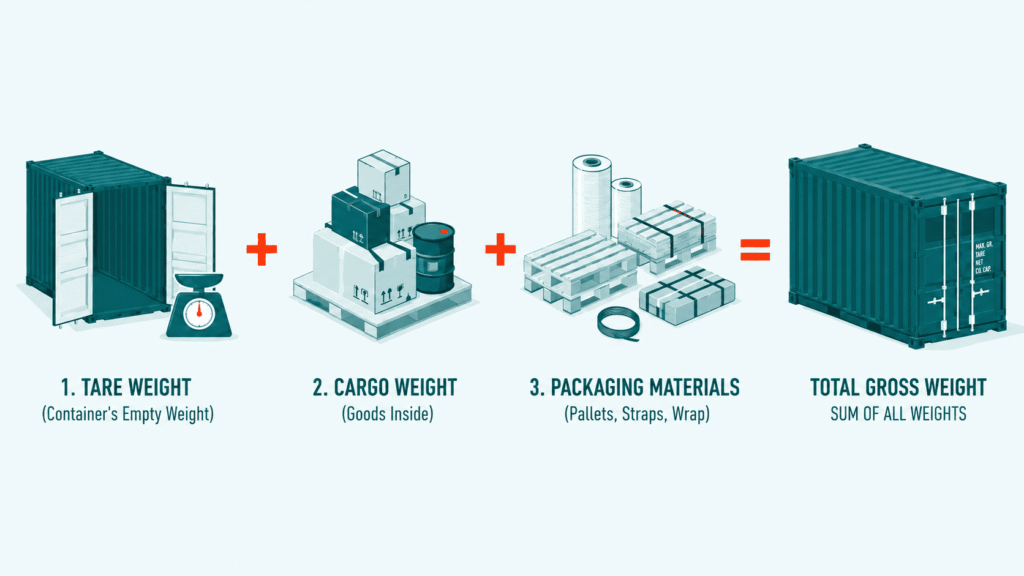
Tare vs Net vs Gross Weight Comparison
| Weight Type | Measures | Includes | Used For |
|---|---|---|---|
| Tare | Empty container or vehicle | Packaging and container only | Container limits and deductions |
| Net | The cargo alone | Goods only | Inventory tracking and billing |
| Gross | The full shipment | Goods, packaging, and container weight | Transport limits and freight fees |
Why Tare Weight Matters In Freight Shipping
Tare can look like a technicality, but it touches cost, compliance, and safety on every shipment:
- Fair billing: Carriers charge based on the weight that moves. Knowing the cargo weight apart from the packaging means you pay for your goods, not the steel around them, which matters most on smaller, less-than-truckload (LTL) shipments, where a reweigh can change the rate.
- Legal compliance: U.S. federal rules cap most trucks at 80,000 pounds gross vehicle weight, with tighter limits per axle. Your empty weight decides how much payload you can legally add before that ceiling.
- Ocean safety rules: Under the IMO’s SOLAS convention, shippers must declare a Verified Gross Mass (cargo plus the container tare weight) before a packed box is loaded onto a vessel.
- Load planning: Accurate empty weights let teams distribute loads correctly and avoid overloading, whether you run freight in-house or work with a 3PL or 4PL partner.
A misdeclared weight rarely stays a paperwork problem. It resurfaces as:
⚠️ reweigh charges,
⚠️ overweight penalties that can climb into thousands of dollars,
⚠️ held shipments, turning a clerical miss into a steeper operational climb.
Each penalty, fee, and delay becomes part of the broader landed cost picture.
How To Calculate Tare Weight
You rarely compute tare from scratch, but when you do, three routes work:
- Read the plate or paperwork. Every container carries its tare on the door, and carriers list it on shipping documents.
- Weigh the unit empty at a warehouse or port. For the most accurate tare weight, rely on verified container markings, carrier documentation, or calibrated scale readings, aligning with the kind of measurement precision emphasized by NIST standards.
- Subtract net from gross when you know both the loaded and unloaded figures.
For example:
A loaded 40-foot container shows a gross weight of 26,700 kg, and the goods inside come to 23,000 kg. The tare is 26,700 − 23,000 = 3,700 kg, right in line with a typical empty steel 40-foot box.
Move Freight With Confidence
Tare, net, and gross weight are the foundation of accurate freight: they decide what you are billed, what you can legally haul, and how safely your cargo travels. Brands that grow steadily treat these numbers as operating data, not afterthoughts.
That is where a partner earns their place. Agile pairs transportation management and 3PL services with wholesale and ecommerce fulfillment to handle weight verification, multi-carrier rate shopping, and compliant load planning across LTL, FTL, and parcel, so every shipment leaves on a firmer footing and arrives without surprises.
Explore better freight shipping and supply management solutions.
Frequently Asked Questions
What’s The Difference Between Tare Weight And Net Weight?
Tare measures the empty carrying unit; net weight measures only the cargo inside, without packaging or transport materials. Add the two, and you get gross weight, the full total moving down the road.
What Does Tare Mean On A Weighing Scale?
On a scale, “tare” is the function that resets the display to zero with an empty container in place. It lets the scale ignore the packaging and show only the contents you add afterward.
How Do You Calculate Tare Weight?
Subtract net weight from gross weight: Tare = Gross − Net. For a truck grossing 30,000 lb while carrying 22,000 lb of goods, the tare is 8,000 lb; the empty weight of the tractor and trailer.
Why Is It Called Tare?
“Tare” reached English through Middle French and Italian from an Arabic word meaning roughly “that which is removed.” The name fits what the figure does: the weight deducted before you reach the value of the goods.
Where Do I Find A Container’s Tare Weight?
It is stamped on the door plate, alongside the maximum gross weight and payload, and repeated on the Bill of Lading. Ocean carriers also publish tare figures for each standard container type.