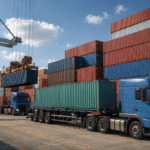




Most e-commerce brands know their factory price by heart, but far fewer can tell you their landed cost; the number that actually decides whether each unit is profitable once it sits on a warehouse shelf. What looks like a clean starting point can become a steeper route once freight, duties, handling, and fees are added.
If you’re sourcing internationally or moving freight domestically at scale, that gap is where margin quietly disappears. This guide breaks down both the landed cost definition and the landed cost formula, explains who pays for it, provides a worked example, and outlines the operational levers you can pull to reduce it.
TL;DR
- Landed cost is the total cost of getting a product from the supplier’s dock to your warehouse shelf: product price, freight, duties, taxes, insurance, and handling combined.
- The standard landed cost formula: Landed Cost = Product + Shipping + Customs & Duties + Insurance + Overhead.
- Landed cost is not the same as COGS or standard cost: landed cost is the actual cost to acquire inventory, not a planned estimate.
- The importer of record typically pays the landed cost, though Incoterms can shift some line items to the seller.
- Reducing landed cost usually means reworking sourcing, freight, and inbound handling, not haggling on the unit price alone.
What Are Landed Costs?
In supply chain terms, the fully landed cost of a product can be calculated once every charge required to get it onto your shelf has been accounted for. That includes the obvious lines (unit price, ocean or air freight) and the easy-to-miss ones (currency conversion, brokerage, port fees, inbound handling at your facility, etc.).
So, what does landed cost mean in practice?
It’s the number you should be using when you compare two suppliers, set a wholesale price, or decide whether an SKU is worth reordering. The invoice price alone tells you very little; a product that looks cheap at the factory can easily land 30-40% higher by the time it’s in receiving and ready to pick.
📌 Note: landed costs are typically discussed in the context of international shipping, but the concept applies to any inbound movement where freight, handling, and overhead meaningfully affect per-unit cost.
Landed Cost vs Standard Cost vs COGS
These three terms are frequently swapped in practice, which can create avoidable accounting errors.
| Term | What It Measures | When It’s Used |
| Standard Cost | A planned, predetermined per-unit cost | Internal budgeting and forecasting |
| Cost Of Goods Sold (COGS) | The cost of products actually sold in a period | Income statement and gross margin analysis |
| Landed Cost | The actual cost to acquire inventory | Pricing, sourcing decisions, and inventory valuation |
⚡ In short:
- Standard cost is what you expect to pay.
- Landed cost is what you actually paid.
- COGS captures the cost of units that have already moved out the door.
- Confusing them is one of the quietest ways to misprice a product.
How Do You Calculate Landed Cost?
This is the standard landed cost formula in supply chain operations:
➡️ Landed Cost = Product Price + Shipping & Freight + Customs Duties & Taxes + Insurance + Overhead
That’s your calculations’ spine. The real work is in defining each component correctly.
Components Of The Total Landed Cost Formula
- Product price. The agreed price paid to the supplier or factory, before any other charges.
- Freight and shipping. Ocean, air, rail, or LTL/parcel transport, plus inland drayage from port to warehouse.
- Customs duties, taxes, and tariffs. Determined by the Harmonized Tariff Schedule (HTSUS) and CBP rulings on country of origin and product classification.
- Regulatory and entry fees. The Merchandise Processing Fee (MPF) and Harbor Maintenance Fee (HMF) for U.S. ocean imports, plus any product-specific fees.
- Insurance. Cargo coverage against loss, theft, or damage in transit.
- Brokerage and overhead. Customs broker fees, currency conversion, payment processing, and inbound handling at the receiving dock.
📌 Note: A useful reference for which side of the table owns each of these charges is the ICC’s Incoterms 2020 rules, which define exactly when responsibility transfers from seller to buyer.
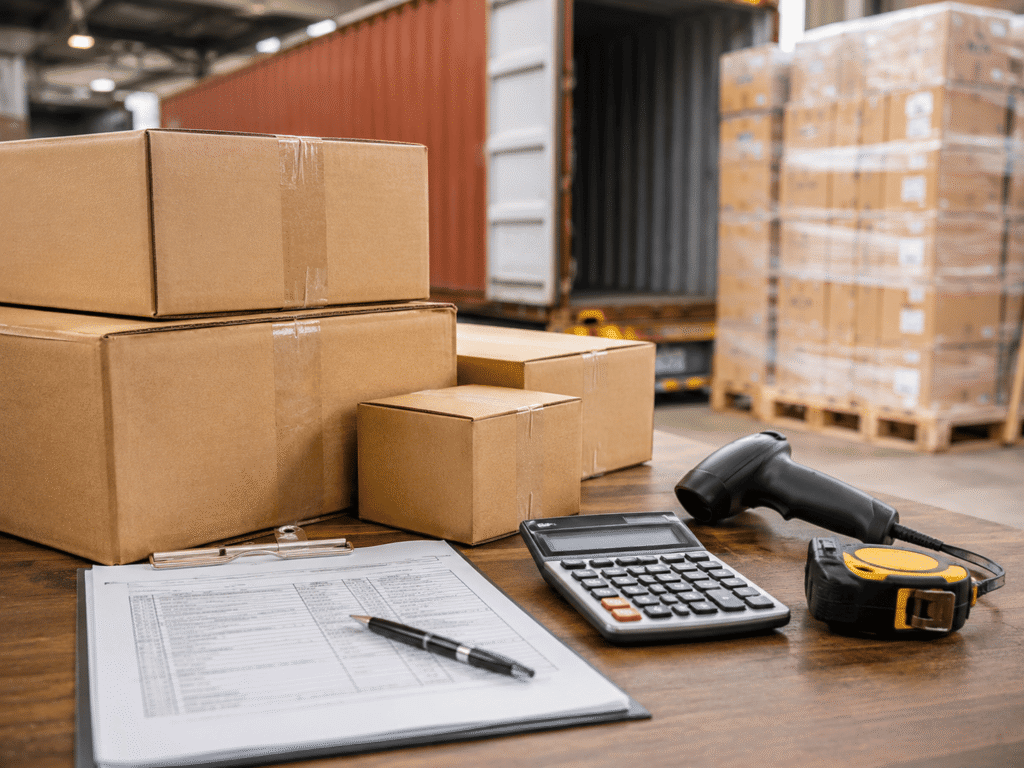
Landed Cost Example: Product Imported From Canada
Here is how to calculate the landed cost of imported goods. Consider a maple cutting board imported from Canada at a $11.50 factory price:
| Line Item | Calculation | Cost |
| Factory Price | – | $11.50 |
| Countervailing Duty | $11.50 × 0.0674 | $0.78 |
| Antidumping Duty | $11.50 × 0.0766 | $0.88 |
| Customs Broker Fee | $11.50 × 0.030 | $0.35 |
| Freight Per Unit | Allocated from $3,200 FTL truckload, 1,200 units | $2.67 |
| Estimated Landed Cost | $16.18 |
A product may leave the factory at $11.50, but that is not the full cost of getting it to your operation. After duties, broker fees, and freight, the cost rises to $16.18, about 41% higher. And that is before insurance, MPF, or inbound handling. Tracking this landed cost factor by SKU helps protect margins and keep pricing decisions on a safer footing.
Who Pays The Landed Cost?
The importer of record (usually the buyer) pays the landed cost. But how the bill is split between buyer and seller before that point depends on the Incoterm in the purchase contract.
- Under EXW (Ex Works), the buyer takes on almost everything from the factory door onward.
- Under DDP (Delivered Duty Paid), the seller covers freight, duties, and taxes through to the destination.
Most ecommerce brands operate somewhere between full supplier control and full buyer responsibility, often under FOB or CIF terms. The seller may cover origin handling, while the buyer takes over at the port. But every cost still has to be accounted for. Whether it appears in the supplier’s price or your own logistics budget, it remains part of the landed cost and affects your margin.
How To Reduce Landed Cost
There is no single lever. Most operators find savings by working three or four of these at once:
- Re-source strategically. Compare suppliers on landed cost, not unit price. A cheaper factory in a high-tariff country can lose every advantage at customs.
- Consolidate freight. Full container loads almost always beat LCL or air on a per-unit basis. A transportation management system helps you rate-shop and consolidate intelligently.
- Right-size your MOQs. Pulling more units per order spreads fixed freight and brokerage charges across more inventory.
- Audit duty classification. Working with a licensed broker to verify HTS codes can shave real percentages off the duty line.
- Hedge currency exposure. For high-volume importers, even modest swings tracked against Federal Reserve FX data can change landed cost by a few points per shipment.
- Optimize inbound handling. Faster dock-to-stock and tighter receiving reduce the overhead bucket of the formula.
Bring Freight, Duty & Handling Costs Into One Clear View
Unify freight, duty, and handling data into one clear view, so margins stay protected and profitable. Agile connects transportation, fulfillment, and 3PL operations in one system, giving brands clearer SKU-level landed cost visibility and stronger margin control.
If landed cost is something you’re calculating once a quarter and hoping for the best in between, there’s a sturdier path.
Frequently Asked Questions
What Is An Example Of A Landed Cost?
A ceramic home décor item with a $5.20 factory price in Mexico might reach a $7.29 final estimated landed cost once duty, agent commission, customs fees, per-unit freight, insurance, MPF, and inbound handling are added. That puts the true cost about 40% above the factory price before the item is even ready to sell.
What Is The Difference Between Standard Cost And Landed Cost?
Standard cost is a planned, predetermined cost used for budgeting and forecasting. Landed cost is the actual total spent to bring inventory to your shelf, including freight and duties. Standard cost guides planning; landed cost reflects reality.
Does Landed Cost Include Taxes?
Yes. Import duties, tariffs, VAT or GST (where applicable), and other regulatory fees are all part of the total landed cost. Sales tax on the downstream resale is not, since it sits outside the inventory acquisition cycle.
Is Landed Price The Same As Landed Cost?
The terms are used interchangeably in most operational contexts. Both refer to the full per-unit cost of a product once it has arrived at the buyer’s facility, ready to be picked, packed, and shipped to the end customer.