

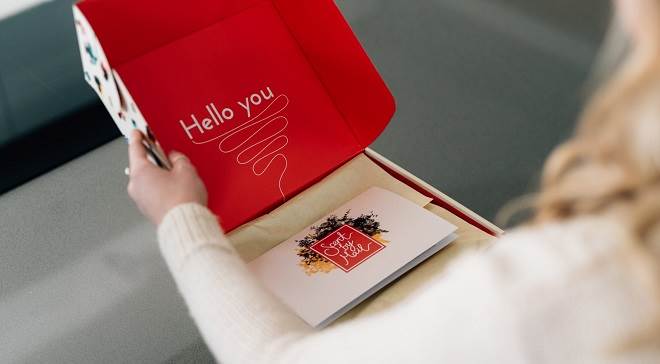
As a kid at Christmas, you’d unwrap a gift, and the box would be from some high-end, chic place, and you’d get excited about what was inside. Because of the label, the brand, the image it conjured, for one fleeting second, you’d be the proud owner of…
“That’s not the real box,” your mother would say, and the magic of a Tiffany’s box would fade as it was revealed that inside the box was a six-pack of tube sox.
The packaging makes an impact.
TL;DR
- The difference between custom and stock packaging comes down to fit: stock packaging is ready-made in standard sizes and branded with labels, while custom packaging is built around a product’s exact dimensions, shape, and branding.
- Stock packaging is cheaper, sold in small minimum orders, and available in days, while custom packaging requires tooling, prototypes, and start-up costs (such as $2,500 for 1,000 units) plus weeks of lead time.
- Custom packaging that fits the product reduces void fill, lowers dimensional weight shipping charges, fits more units per pallet, and cuts the damage that leads to returns and customer complaints.
- Start-ups and low-volume sellers usually get more value from stock packaging, while brands with larger volumes, fragile products, or a need to stand out benefit most from switching to custom packaging.
Custom & Stock Packaging
There are basically two types of packing you can employ when sending your products to market or to customers. Let’s look at their differences before we break down which is the right choice for you.
Stock Packaging
Stock packaging is largely ready-made, generic packaging that you can affix a label to. This type of packaging is usually very inexpensive to make and to purchase, and it most often comes in restricted, standardized sizes and designs.
Many companies use stock packaging exclusively because it wouldn’t make monetary sense to have their packages custom-made.
In retail, jars of sauces or salsas, vitamin bottles, beverage bottles, protein powders, canned foods, and the like are all examples of stock packaging with custom labels affixed.
A giant company like Johnson & Johnson would have the money and the need for things like having custom bottles for their products made. If you’re selling jars of honey on the weekends at the local farmer’s market, do you really want to incur the expense of having specially designed honey jars? Does that make sense for your burgeoning business? Is that where you need to spend your money right away?
Stock packaging is cheap, easy, abundant, and it won’t break the bank if you’re a start-up or a small business that isn’t looking to take over the world.
Custom Packaging
As opposed to the ready-made, generic packaging of stock, custom packaging is just what it sounds like. Custom packaging is packaging that is specifically and uniquely tailored to your product.
This type of packaging is actually designed by a packaging structural engineer, and it requires special tooling. The tooling, cutting dies, and printing plates are used in various machinery that creates your specific packaging.
This type of packaging is more expensive than stock because it requires a lot of prep time, along with extensive planning and design.
Custom packaging usually requires that a prototype be made and approved, as well as production set-up, which you will pay for, and the tooling that was mentioned before. It is expensive, and the up-front costs can be intimidating when making the choice between the two options, stock or custom.
It should be noted that the level of customer service during all stages of custom packaging is much higher than it is when dealing with stock packaging. You’re paying for a higher quality of goods and you’re getting a higher quality of service as a result.
Custom Packaging Costs
You should be aware that when weighing whether to go for custom packaging or stay with stock packaging, custom packaging companies often have a minimum start-up cost. This means you’ll be charged a minimum price just to get the machinery started. This applies even if you order just one unit of packaging.
There will also be a minimum volume requirement included in the start-up costs. This is actually in place, so the entire process makes more sense. For example, a packaging company might have a minimum start-up cost of $2,500. That would include a minimum of 1000 units of packaging.
You should know that most packaging types – folding cartons, rigid boxes, stand-up pouches, poly-bags, and the like have both custom and stock options.
Stock vs Custom Packaging: Side-By-Side Comparison
Stock and custom packaging differ in five main ways: how the packaging fits your product, how your brand shows up on it, what it costs, how fast you can get it, and how easily it adapts as your business changes. Here’s how the two stack up.
Structure & Fit
Stock packaging comes in preset, standardized sizes, so you pick the box, bottle, or pouch that’s closest to your product. Close isn’t always close enough. A loose fit leaves empty space that needs void fill and can raise the dimensional weight you’re billed for. Custom packaging is built to your product’s exact dimensions, shape, and structure, often with inserts that hold each item in place.
Branding
With stock packaging, your brand gets added after the fact with labels, stickers, stamped logos, or sleeves. That works well (think of every salsa jar and vitamin bottle on a grocery shelf), but it can look generic sitting next to a competitor’s. Custom packaging lets you print your artwork edge to edge, directly onto the material, so the box itself becomes part of the brand experience.
Cost & Minimum Orders
Stock packaging wins on upfront cost. Units are cheap, and suppliers usually sell in small minimum order quantities, so you aren’t sitting on thousands of boxes you don’t need yet. Custom packaging carries setup and tooling costs plus larger minimums, like the $2,500 start-up cost covering 1,000 units mentioned above. At higher volumes, though, a better fit can win some of that money back through lower shipping and damage costs.
Lead Time
Stock packaging is already manufactured and sitting in a supplier’s warehouse, so you can usually have it in days. Custom packaging takes longer because it moves through design, dieline creation, sample approval, and then production. Plan on weeks, not days, and build that time into any product launch.
Flexibility & Storage
Stock packaging is easy to switch. If you change a product size or drop a SKU, you simply order a different stock box. Custom packaging is harder to change once you’ve paid for tooling and a minimum run, which matters if your product line evolves quickly. Each custom design is also its own SKU that needs warehouse space, so more products mean more packaging inventory to store and track.
Which Is Best For You?
There are things to consider on both sides of the aisle when it comes to choosing your packaging. What are you looking for from your packaging, how much can you afford to spend on packaging, and could that money be better spent elsewhere in your company, or is it worth the cost?
Also, think about these things. The aesthetics of your brand are vital and shouldn’t be taken lightly. Your packaging may be the first or the last impression your brand has with a customer. As most companies know, acquiring new customers is much more difficult than keeping old, loyal customers. With that in mind, the first impression you make with your packaging may be more important than you think.
Stock packaging generally works well for smaller volumes of packaging. Some examples of who might benefit from stock packaging are:
- Start-ups with limited budgets
- Test marketing situations
- Production shortages
- Trade show samples subscription boxes
- Shipping boxes used by online stores
Stock packaging is a good choice for those seeking less of an expense when buying small quantities. It’s easier and faster to get stock packaging, and it’s perfect if you’re new, starting out, and custom packaging may be too much of an expense at this point in your business.
It’s reliable and serviceable.
With custom packaging, you’re getting more. Custom packaging doesn’t just mean boxes or poly-bags with your logo printed on them. It means box sizes and protective packaging that are customized to your product.
DIM pricing is starting to become the standard for shipping rates. Customizing packaging to optimize size and level of protection can save you money on shipping costs over time. A customized size will get the best DIM shipping rate for every order.
On top of that, the branding feature can improve a customer’s perception of your business. Branding custom packages represents an opportunity to create something memorable and give your customers a positive experience through your custom packages.
If you have a larger volume of packaging needs, custom packaging is going to save you money and time over the long run, and you’re creating a better brand image connection with your customers.
The advantages of custom packaging are certainly worth considering if you’re looking to move up or you want an advantage over your competition.
Protection
Another feature of custom packaging that’s important to consider is the protection it can give to your products.
Because custom packaging fits your specific product, when packing for shipment, your products fit better in boxes, with little wiggle room, and thus they’re more protected from possible breakage.
Also, because of the better fit, there should be fewer waste materials. Excess or waste material can mean the packaging itself, as well as fill packaging that is often used for shipping in ill-fitting stock packaging.
Better fitting packaging might not seem like an important detail; however, better fitting packaging means more products per pallet can be shipped, which will lower your shipping costs.
And, secure packaging cuts down on returns and customer complaints. Giving the customer a positive experience when shipping to them can add to brand loyalty and translate to more conversions.
Who Worries About Complaints
If you’re not worried about complaints or product returns due to damage in shipping, then you’re not doing yourself any favors. When a customer complains, you need to pay attention because a bad review or a complaint can be devastating to your business. Especially if you’re just starting out.
When a customer is not happy, there is a 91% chance they won’t do business with the offending company again. Dissatisfied customers typically tell 9-15other people about their bad experience. And it takes roughly 40 positive customer experiences to undo the damage of one negative review.
This is something to keep in mind when you’re deciding if your product is going to be shipped in a one-size-fits-all package or a more unique, perhaps safer, custom package.
Custom & Stock Packaging FAQs
What Is Stock Packaging?
Stock packaging is ready-made, off-the-shelf packaging, such as boxes, bottles, jars, and pouches, manufactured in standard sizes and sold from a supplier’s catalog. Because it already exists, it’s inexpensive, available quickly, and sold in small minimum orders. Businesses typically brand it with labels, stickers, stamps, or sleeves. Sauce jars, vitamin bottles, and plain corrugated shipping boxes are all common examples.
What Is Custom Packaging?
Custom packaging, sometimes called bespoke packaging, is designed from scratch around a specific product’s dimensions, shape, structure, and branding. A packaging engineer creates the design, and the manufacturer builds tooling, cutting dies, and printing plates to produce it. The result fits the product closely, protects it better in transit, and carries the brand’s artwork directly on the material, but it costs more and takes longer to produce than stock options.
What Is The Difference Between Stock And Custom Packaging?
The main difference is how the packaging is made. Stock packaging comes in preset sizes that already exist, so it’s cheaper, faster to get, and available in small quantities. Custom packaging is built to your product’s exact specifications, so it fits better, protects better, and showcases your brand, but it requires setup costs, larger minimum orders, and longer lead times. Most brands start with stock and move to custom as their volume grows.
How Long Does Custom Packaging Take To Produce?
Custom packaging usually takes several weeks, while stock packaging can often ship within days. The exact timeline depends on the supplier and the complexity of the design. Custom orders go through several stages before production: structural design, dieline creation, prototyping, and sample approval. Revisions at the sample stage add time, so it’s smart to start the process well before a product launch or your peak season.
What Is The Minimum Order Quantity For Custom Packaging?
Minimum order quantities for custom packaging vary by supplier and packaging type, but they’re almost always higher than for stock packaging. Many custom packaging companies also charge a minimum start-up cost that covers machine setup, whether you order one unit or a full run. For example, a supplier might charge $2,500 to start production, with that price including at least 1,000 units.
Can You Brand Stock Packaging?
Yes. Most brands that use stock packaging add their identity with custom labels, stickers, stamped logos, branded tape, or printed sleeves. It’s how many food, supplement, and beverage companies brand standard jars and bottles. The limitation is coverage: branding sits on top of a generic container rather than being printed edge to edge, so stock packaging rarely matches the visual impact of a fully custom design.
Is Custom Packaging Worth It For Small Businesses?
It depends on your volume, budget, and product. For a small business shipping low volumes, stock packaging usually makes more financial sense, since custom packaging comes with setup costs and minimum orders that tie up cash. Custom packaging becomes worth it when you ship enough volume to spread those costs out, sell fragile or high-value products that need better protection, or rely on the unboxing experience to stand out.
Does Custom Packaging Lower Shipping Costs?
It can. Carriers price most parcels by dimensional (DIM) weight, which charges for the space a package takes up, not just what it weighs. Custom packaging sized to your product eliminates wasted space, so each order gets billed at a lower DIM weight. A better fit also means more units per pallet on freight shipments and fewer damaged items, which cuts the cost of replacements and returns.
Is It Time?
Basically, it’s not a matter of should you or shouldn’t you, but rather it’s a matter of is now the time? If every business had the kind of financial strength as a giant like Johnson& Johnson, there would be no question: yes, we will use custom packaging.
However, unless you’re Johnson & Johnson, you’re not Johnson & Johnson. Maybe you’re just starting out, and there are expenses you want to meet now that preclude using custom packaging. That’s fine, stock packaging has its positives in terms of affordability and quick availability. It has been around for some time, so it works.
If you’ve got the capital and you feel that your brand is champing at the bit to take the next step and get a serious edge on the competition, then you need to put serious thought into custom packaging.
If it is time and you’re ready for that next step, Agile is the perfect place to turn for all your ecommerce and order fulfillment needs. We’re here to get you started and keep you going, making sure you get the custom packaging that’s perfect for your products. With Agile, you’ll climb higher, faster.